Best PDF Collaboration Tools for Remote Teams in 2026
Pdf collaboration tools for remote teams does not require expensive software or deep technical knowledge — but it does require knowing which specific actions m…

PDF collaboration goes wrong in a predictable way: five people annotate five copies of the same file, and someone has to reconcile them by hand. The tools worth using are the ones that keep everyone on one document, and the choice depends mainly on where your team already works.
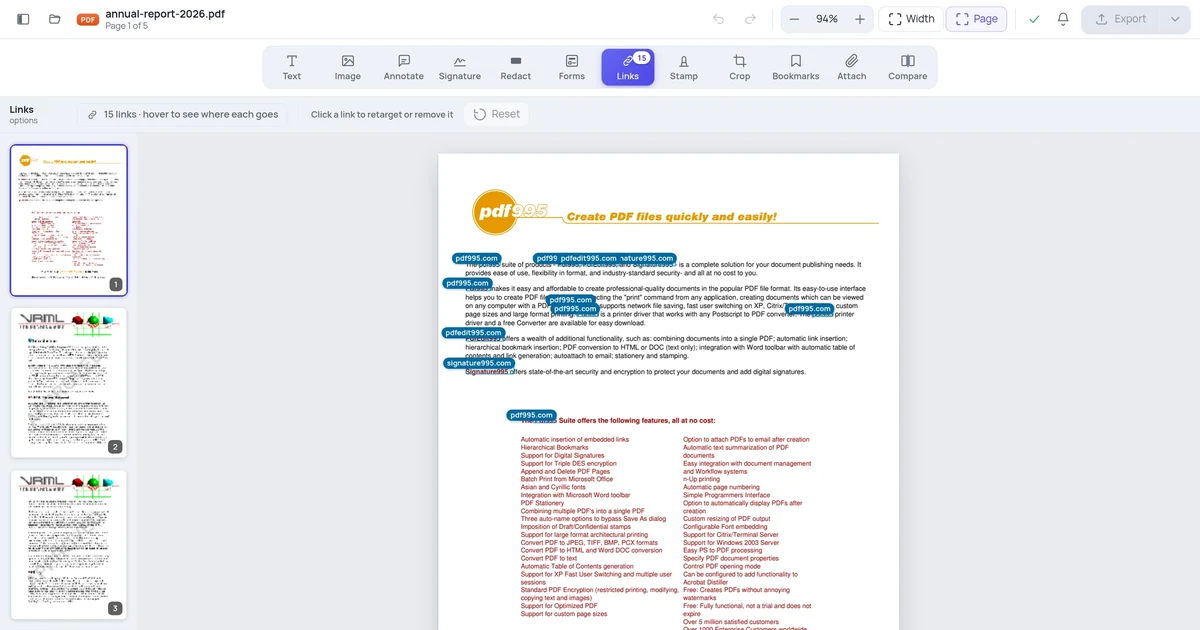
Adobe Acrobat shared review
The most complete implementation. Send one document for review, everyone comments on the same copy, comments are threaded and attributable, and you can track who has responded. If your reviewers already have Acrobat or Reader, this needs no new tooling. Sharing features require a subscription.
Google Drive
The pragmatic default for teams already in Workspace. Comments attach to the file, notifications are handled, and everyone has access without new accounts. The limitation is real: Drive comments sit alongside the PDF rather than being anchored to a place on the page, so "the third paragraph on page 7" has to be said out loud.
Dropbox
Similar shape with better in-context annotation — marks can be placed on the document rather than only in a comment thread. Good when files already live in Dropbox.
Kami
Built for annotation-first collaboration and widely used in education. Real-time markup on a shared document, with an interface designed for people who are not PDF specialists. Strong when the work is the annotation — reviewing student submissions, marking up drafts.
Filestage
Review-workflow rather than PDF software: structured approval rounds, deadlines, and a clear record of who signed off. Right when the process matters as much as the comments — creative approvals, compliance sign-off.
Making it work regardless of tool
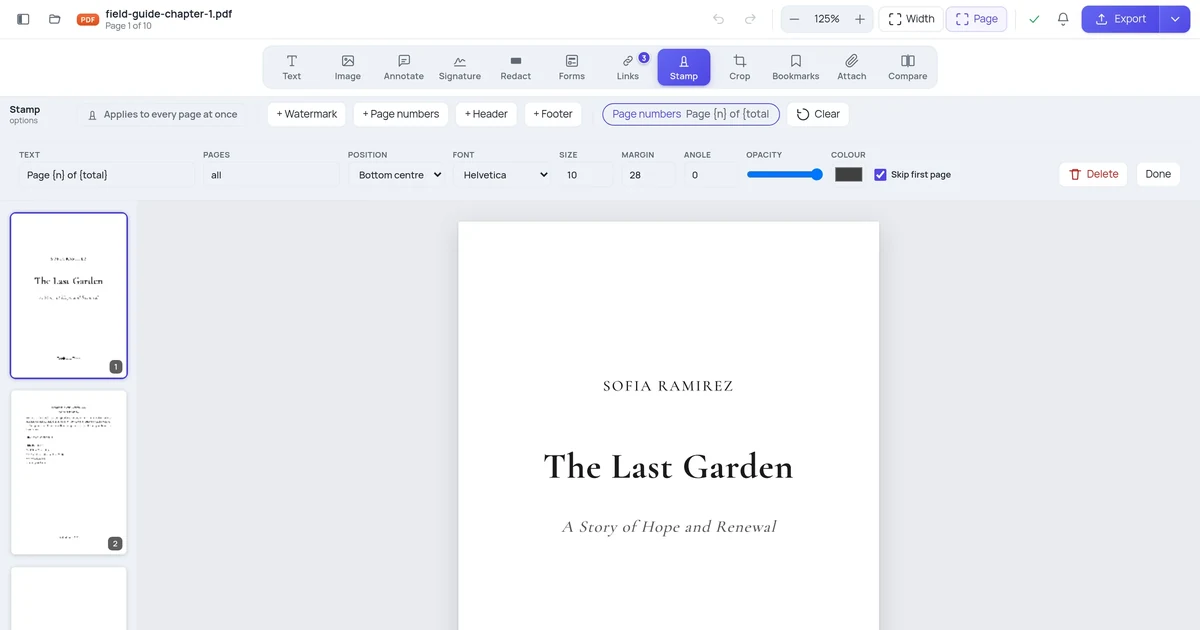
Two things matter more than the choice. Everyone annotates the same copy — most reconciliation pain comes from parallel copies, not from any tool's shortcomings. And flatten before the document leaves the review, so the final version shows the same thing to everyone, including people whose viewers do not render annotations.
When the review is over and edits need applying to the document itself, that is a separate step: Online PDF Edits changes the text in the original file without disturbing the surrounding layout.
How this list was put together
These are capability comparisons drawn from each tool's own documentation and generally available behaviour, not a hands-on benchmark. Prices and version numbers are deliberately left out: they change often enough that a stale figure here would be worse than none. Check the vendor's page for current pricing before committing to anything paid.
Frequently asked questions
Why do some reviewers not see others' comments? Almost always parallel copies rather than one shared document. Verify everyone opened the same link, not a downloaded duplicate.
Do PDF comments survive being exported? Standard PDF annotations do. Comments stored in a platform's own layer — Drive comments, for example — belong to the platform and do not travel with a downloaded file.
How do we stop the "final_v3_FINAL" problem? One shared location, one current file, and flatten the version that is genuinely final so it is visibly different from the working copies.
Is a free tool enough for a small team? Usually. Google Drive or Dropbox covers most needs. Paid tools earn their cost when you need audit trails, approval gates or deadline tracking.