Best PDF Security Software in 2026
A practical, honest ranking for PDF security software — judged on layout fidelity, price, watermarks, and friction, with our pick and when each option makes sense.

"PDF security" covers four different things that get confused with each other: stopping someone opening a document, stopping them changing it, removing information from it permanently, and controlling what they do with it after they have it. Different tools solve different ones, and buying for the wrong one is the usual mistake.
The four, and what actually enforces them
Encryption (user password) — the document cannot be opened without the password. This is real cryptography and the only item on this list that genuinely cannot be bypassed.
Restrictions (owner password) — the document opens but printing or copying is disallowed. Enforced by the viewer choosing to honour a flag, not by cryptography. Useful as a signal of intent; not a security control.
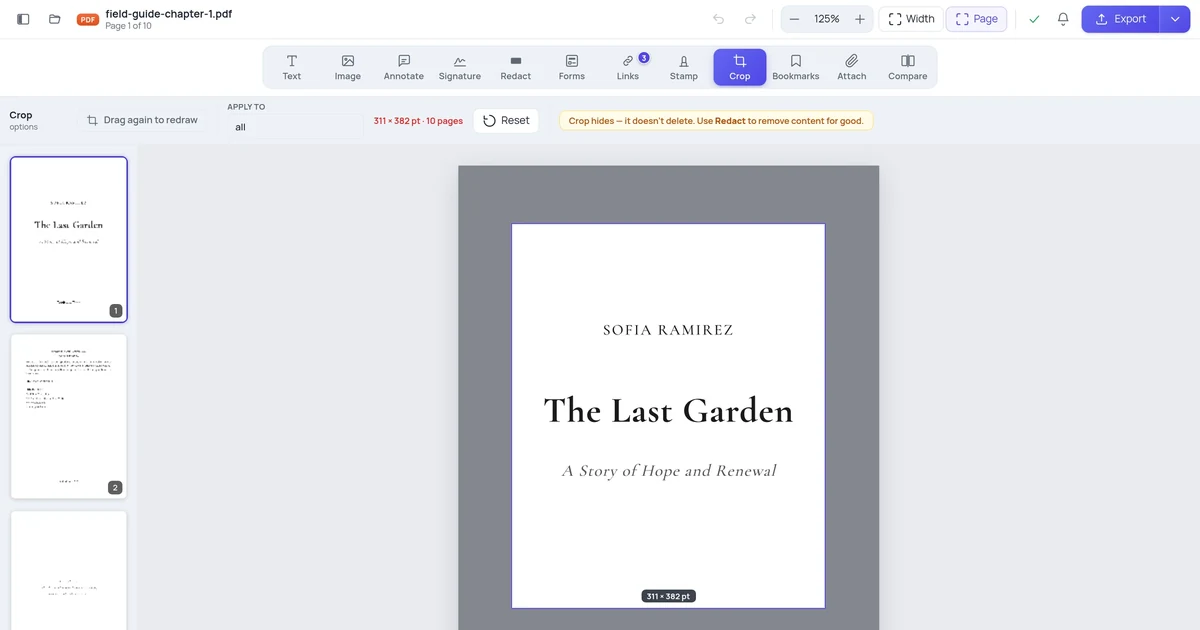
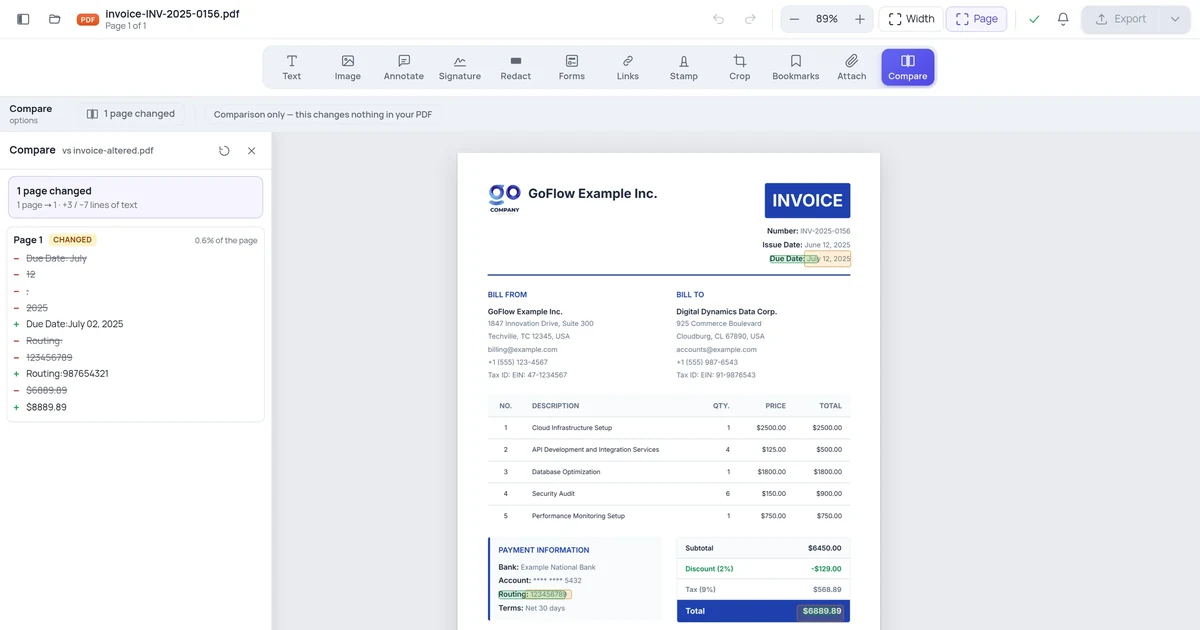
Redaction — content is removed from the file permanently. Unlike the two above, this changes the document rather than wrapping it.
DRM — control over what a recipient can do after opening: expiry, device limits, revocation, watermarking per recipient. Requires a separate system, not a PDF feature.
Online PDF Edits
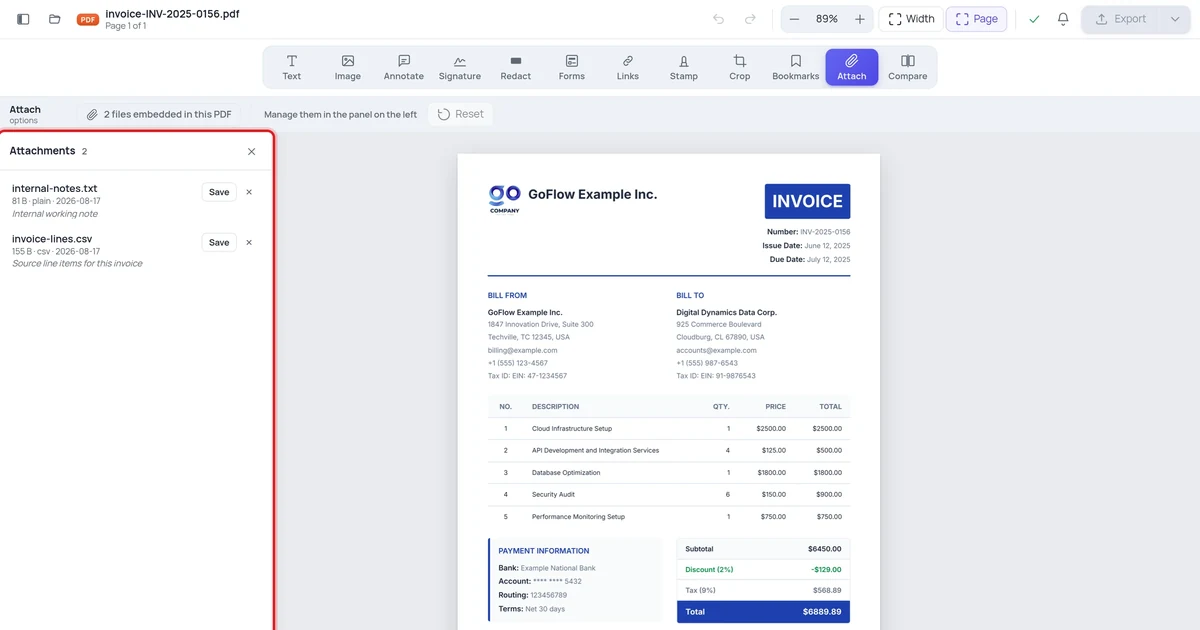
Covers two of the four. Encrypt PDF sets and removes passwords on documents you control, and the editor does true redaction that removes the underlying content. Online PDF Edits edits files up to 10 MB and 100 pages (its compressor accepts up to 100 MB). It has no OCR, so scanned pages need an OCR pass elsewhere first, and it is not built for bulk or automated workflows.
It does not do DRM, certificate-based signatures, or redaction audit logs. For those, see below.
Adobe Acrobat
Encryption, restrictions, redaction with an audit trail, certificate-based signing, and integration with Adobe's rights-management product. The most complete single answer if you need several of the four.
Locklizard, Vitrium and FileOpen
DRM proper: expiry, revocation after distribution, device binding, per-recipient watermarking. These are licensing systems rather than PDF editors, and they are what you need if the requirement is control after the file has left you.
qpdf
Command-line encryption and decryption with the password you hold. Scriptable, local, and the right tool for applying protection across many files.
The thing worth internalising
Once someone can read a document, they can photograph the screen. Encryption controls access; nothing controls what happens after legitimate access. DRM raises the effort and creates an audit trail — it does not make a document uncopyable, and any vendor implying otherwise is overselling.
How this list was put together
These are capability comparisons drawn from each tool's own documentation and generally available behaviour, not a hands-on benchmark. Prices and version numbers are deliberately left out: they change often enough that a stale figure here would be worse than none. Check the vendor's page for current pricing before committing to anything paid.
Frequently asked questions
Can PDF restrictions be bypassed? Owner-password restrictions, yes, easily — they depend on the viewer honouring a flag. A user password is real encryption and cannot be bypassed without the key.
Is password-protecting a PDF enough for confidential documents? For controlling who can open it, yes, with a strong password sent separately. It does nothing about what the recipient does afterwards.
What is the difference between redaction and covering text? Redaction removes the content. Covering leaves it in the file, retrievable by selecting or extracting it.
Do I need DRM? Only if you must control the document after delivery — expiry, revocation, per-recipient tracking. For most business documents, encryption plus sensible handling is proportionate.