How to Add a Text Box to a PDF
A practical guide to adding a text box to a PDF, dropping a box anywhere on the page, typing your text, styling it, and positioning it cleanly without disturbing the original.

To add a text box to a PDF, open the file in an online editor, click the Add Text or Text Box tool, then click on the page where you want the text. A box appears with a blinking cursor, so just start typing. Set the font, size, and color, drag the box into position, then save and download to bake the text into the file. No installs needed.
Key takeaways
- Adding text is different from editing text: a text box is brand-new content you place on top of the page, not a change to the words that are already there, so it works even on scanned or locked-looking PDFs.
- Click to place, then type: the standard flow is pick the text tool, click where you want it, and start typing into the box that appears, then style and position it afterward.
- Set font and size before you fuss over position, because changing the typeface changes the box's width and would move everything you carefully aligned.
- The box does not reflow like a word processor; if you type more than fits, the text can overflow or wrap awkwardly, so resize the box rather than expecting the page to make room.
- Position with the page, not just by eye: zoom in, use alignment to existing text or margins, and check the box is not sitting over content you need to keep readable.
- No software to install for the basic job; a browser-based editor drops a text box on any device, and the text travels with the file once you export.
What a text box actually is in a PDF
When you add a text box, you are placing a fresh piece of text on top of the page as a new object. You are not editing the existing words, you are layering your own on. That distinction matters more than it sounds, because it explains why adding a text box works in situations where editing the original text does not.
A PDF locks each piece of existing text to a fixed font and position. Editing that text means the editor has to find it, match its font, and rewrite it in place. Adding a text box skips all of that: you are dropping a new box wherever you click and typing into it from scratch. So even on a scanned PDF, which is really just an image with no selectable text, you can still add a text box, because you are not touching the image at all, just floating new text above it.
This is the right tool when you need to write something that was not there before: a note, a date, a name on a form, a label on a diagram, a caption under a photo, a line of instructions. It is the wrong tool when you want to fix a typo in the body text, because that is editing, not adding. If your goal is to change words that already exist on the page, that is a separate task with its own approach.
How do I add a text box to a PDF?
Here is the straightforward path using an online editor. You upload the file, drop a text box, type, and style it.
- Open your PDF in the editor. Go to the PDF editor and upload the file. Every page opens in your browser ready to work on.
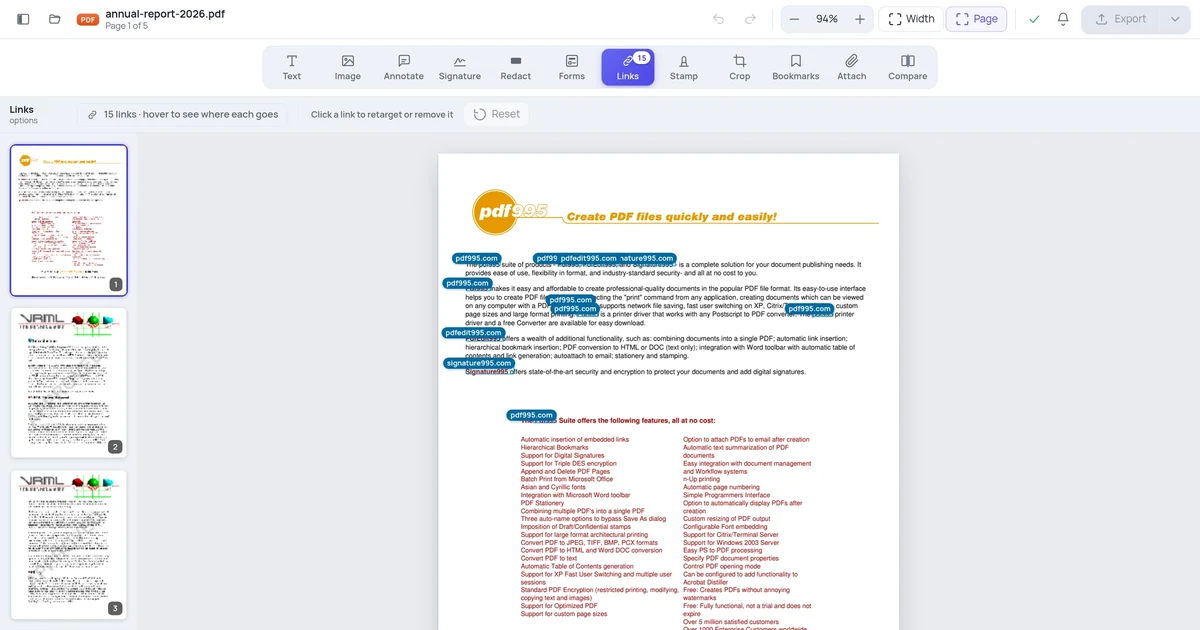
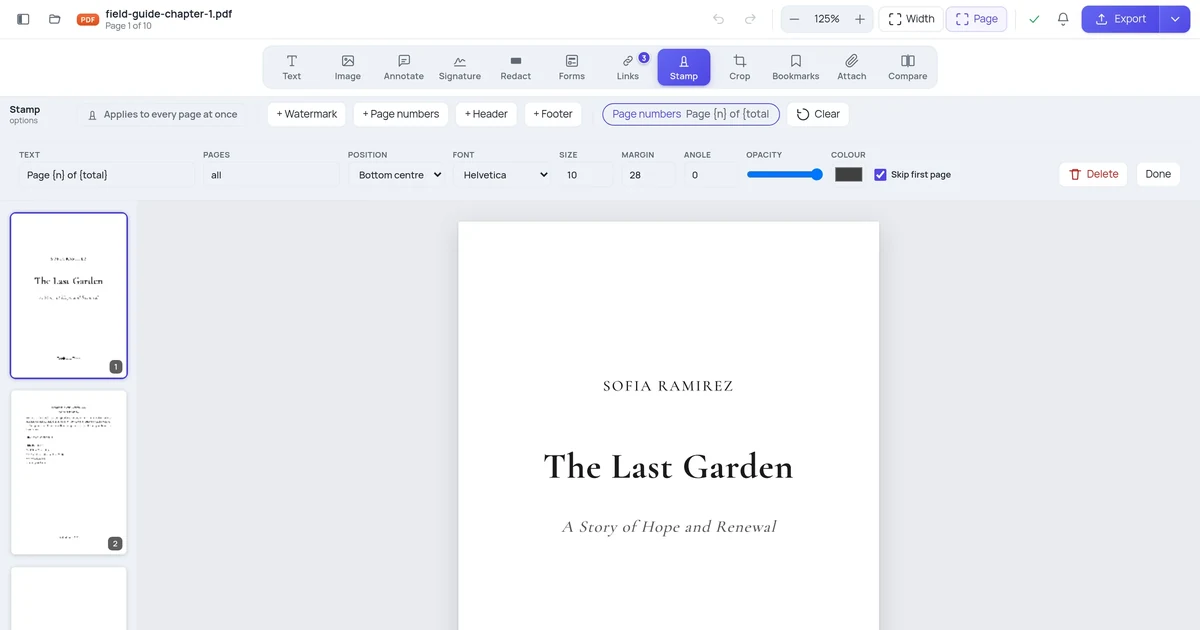
- Select the Add Text tool. In the toolbar, click the text tool (often labeled Add Text or Text Box). Your cursor changes to show you are in text-placement mode.
- Click where you want the text. Click the spot on the page where the box should start. A text box appears at that point with a blinking cursor inside it.
- Type your text. Just start typing. The words go straight into the box. Press Enter for a new line within the same box.
- Set the font and size. With the box selected, use the formatting toolbar to pick a typeface and point size. Do this before you fine-tune the position, since it changes how wide the box is.
- Set the color if needed. Use the color picker to match surrounding text or stand out deliberately. The default is usually black.
- Drag the box into position. Click the box edge and drag it where it belongs. Zoom in for precise placement against existing text or margins.
- Resize the box if the text overflows. Drag a corner handle to widen or shorten the box so your text fits cleanly without spilling.
- Save and download. Export the file. The text box is written into the document and stays with it wherever it goes.
That is the whole task for a single note or label. The parts most guides skip are what happens when you type more than fits, and how to make a new box look like it belongs on the page rather than pasted on. Those are next.
The catch: a text box does not reflow the page
Here is the surprise that trips people up. In a word processor, if you type too much, the paragraph grows and everything below it slides down to make room. A PDF does not do that. The page is fixed. Your text box is an object floating on top of it, so when you type more than the box was sized for, one of two things happens: the text overflows past the box edge, or it wraps inside the box and may run off the bottom or overlap whatever is underneath.
Nothing on the page moves aside for it. That is by design, but it catches anyone expecting word-processor behavior.
So treat the box size as part of the job:
- Widen the box by dragging a corner handle if your line is getting cut off on the right.
- Make the box taller if you are typing several lines and they run past the bottom edge.
- Watch what is underneath. A box placed over existing text or an image can make both unreadable; move it to clear space or shrink the text.
- Break long content into a couple of boxes if you are placing text in different regions, rather than fighting one giant box.
For a one-line label this never comes up. For a paragraph of notes, sizing the box correctly is the real work.
Make the new text look like it belongs
A text box that obviously does not match the page reads as an afterthought. A few small choices make it look native instead.
The biggest lever is the font. If you are adding text near existing body text, match the typeface and size so the new line does not jump out. Our guide on how to change text color in a PDF walks through the color picker in detail, and the same logic applies here: pick a color that matches the surrounding text unless you specifically want the new text to stand out, like a red "DRAFT" stamp or a highlighted note.
Position is the other half. Eyeballing placement is fine for a quick note, but for anything that should look intentional, zoom in and align the box to the same left margin as the text above or below it. A box that lines up with the existing margins looks deliberate; one that sits a few pixels off looks sloppy. If your editor shows alignment guides as you drag, use them to snap the box into line.
| If you want the text to | Set the font to | Set the color to |
|---|---|---|
| Blend in with body text | Match the surrounding typeface and size | Match the existing text color (usually black) |
| Stand out as a note or stamp | A bold or larger size | A contrasting color like red |
| Fill in a form field | Match the form's label font if you can | Black, or blue to mimic ink |
The goal is that someone reading the finished PDF cannot tell which text was original and which you added, unless you wanted them to.
Adding a text box on different devices
The flow is the same idea everywhere, but the tooling differs.
| Platform | How you add a text box | Notes |
|---|---|---|
| Online (any browser) | Open the PDF editor, pick the text tool, click, and type | Works on desktop and mobile browsers; nothing to install |
| Windows (desktop app) | A PDF editor's Add Text or Comment tool, then click and type | Free readers often only allow comment-style notes, not true content text |
| Mac (Preview) | Markup toolbar, the Text button (a box with a T), then drag the box | Good for quick notes; styling options are limited |
| iPhone / iPad | Markup in Files or Books, the text annotation tool | Fine for a signature line or short note; fiddly for precise placement |
| Android | A PDF app with annotation, the text tool | Quality varies a lot by app; check the text actually saves into the file |
A common gotcha on phones and in free desktop readers: what looks like adding text is sometimes a comment or annotation, which can render differently or even get stripped when the file is opened elsewhere. If the recipient must see your text exactly where you put it, add it as real content and confirm it survives by reopening the saved file. The online route avoids most of this because the text is written into the document on export.
When a text box is the wrong tool
Adding a box is perfect for new content: notes, labels, dates, names on a form, captions. It is the wrong reach in a couple of cases.
If you are trying to fix or change words that are already on the page, do not stack a text box on top. That leaves the old text underneath, which can show through, double up when the file is searched, or peek out around your box. Editing existing text is a different operation, and if the words already exist, edit them in place rather than covering them.
If you have the original source file, the Word document or design the PDF came from, and you are adding more than a line or two, it is often cleaner to add the text there and re-export. You get proper reflow and styling instead of hand-sizing boxes. Editing the PDF directly is for when you do not have the source, or the addition is small.
And if you are adding a logo, a signature image, or any graphic rather than text, that is not a text box at all. Our guide on how to add an image or logo to a PDF covers placing pictures, which uses a different tool and has its own sizing and resolution considerations.
A quick word on privacy, since you are uploading a document. An online editor processes your file on a server to add the text, and files are not kept long-term. That is normal for browser-based editing, but worth knowing before you upload anything sensitive.
A worked example
Say you have a one-page contract exported as a PDF and you need to add a date and a name on the signature line, which the original left blank. You open the file in the PDF editor, pick the Add Text tool, and click just above the "Date" line. A box appears and you type the date. It is in the default font, which looks a little off next to the printed text, so you open the font dropdown and match the contract's typeface, then drop the size to match. You drag the box so it sits neatly on the line. You repeat for the name above the "Print Name" line, aligning it to the same left margin so both additions line up. The body of the contract is untouched because you only ever added new boxes on top of blank space. You download the file, reopen it to confirm both lines saved exactly where you placed them, and send it on.
FAQ
How do I add a text box to a PDF?
Open the PDF in an online editor, select the Add Text or Text Box tool, then click on the page where you want the text. A box appears with a blinking cursor, so start typing. Use the formatting toolbar to set the font, size, and color, drag the box into position, and resize it if your text overflows. Save and download to write the text into the file. It works even on scanned PDFs, because you are adding new text on top, not editing existing words.
Why can't I move my text box where I want it?
Usually the box is snapping to an alignment guide or you are still in placement mode rather than selection mode. Click an empty area first to deselect, then click the box's edge to grab it and drag. Zoom in for fine control; at full-page zoom a few pixels of movement is hard to judge. If the box jumps to line up with nearby text, that is the alignment helper working, which is normally what you want for clean placement.
Can I add a text box to a scanned PDF?
Yes. A scanned PDF is an image of a page with no selectable text, but adding a text box does not touch the image, it floats new text on top. So you can place a note, date, or label anywhere on a scan. The one thing you cannot do is edit the words in the scan itself, because they are pixels, not text. For that you would need OCR first, but for adding fresh text a box works fine on any scan.
Why does my added text disappear or move when I open the PDF elsewhere?
This usually means the text was added as a comment or annotation rather than real content, which some readers render differently or strip out. It can also happen if you saved without fully exporting the file. Add the text as actual content and download a flattened copy, then reopen it to confirm the text is baked in and sitting where you left it. The online editor writes added text into the document on export, so it travels with the file.
How do I make added text match the existing text in the PDF?
Select the box and set its font to the same typeface and point size as the surrounding text, then set the color to match, usually black. Zoom in and align the box to the same left margin as the lines above or below it so it lines up cleanly. The aim is that a reader cannot tell which text was original and which you added. If you want it to stand out instead, use a bold weight or a contrasting color on purpose.