How to Change the Font in a PDF
A practical guide to changing the font in a PDF, swapping typefaces on selected text while keeping spacing intact and avoiding the embedded-font and scanned-page traps.

To change the font in a PDF, open the file in an online editor, click the text you want to restyle, select it, then pick a new typeface from the font dropdown. The change applies to the selected text only, so you can swap one heading or the whole paragraph. Save and download to bake the new font into the file. Most edits take seconds.
Key takeaways
- Select the text first, then choose a font: changing the font is a per-selection edit, so highlight the words you want to restyle rather than expecting a document-wide switch.
- Fonts change the width of text, so after swapping a typeface, check that lines have not shifted, overlapped, or pushed onto a new line, and nudge spacing if they have.
- The biggest trap is missing fonts: if your new font is not embedded, a viewer on another computer may substitute something else and your careful change falls apart.
- Scanned PDFs have no real text to restyle; the page is an image, so you cannot change a font until the text is recognized with OCR first.
- Font, size, and color are separate controls; changing the typeface alone leaves size and color as they were, and each has its own quick fix.
- No software to install for the basic job; a browser-based editor handles the swap on any device.
What "changing the font" in a PDF actually means
A PDF is not a word processor document. When a file is created, each piece of text is locked to a specific font, size, and position, and the format is designed to display exactly the same everywhere. That is great for fidelity and slightly awkward for editing, because there is no single "Body Text" style you can redefine to ripple through the whole file the way you would in Word.
So when you change the font in a PDF, you are really telling the editor: take this selected run of text and re-render it in a different typeface. The editor removes the old glyphs and draws new ones in the font you picked. Everything else, the size, the color, the position on the page, stays unless you change it too.
This matters for expectations. If you have a 30-page report and you want every paragraph in a new font, you are not flipping one switch; you are restyling each text block. For a heading, a caption, a single line, or a short paragraph, it is fast and clean. For a whole document, it is more work, and at that point it can be worth asking whether you should be editing the source file instead. More on that trade-off below.
How do I change the font of text in a PDF?
Here is the straightforward path using an online editor. You upload the file, select the text, and choose a new font.
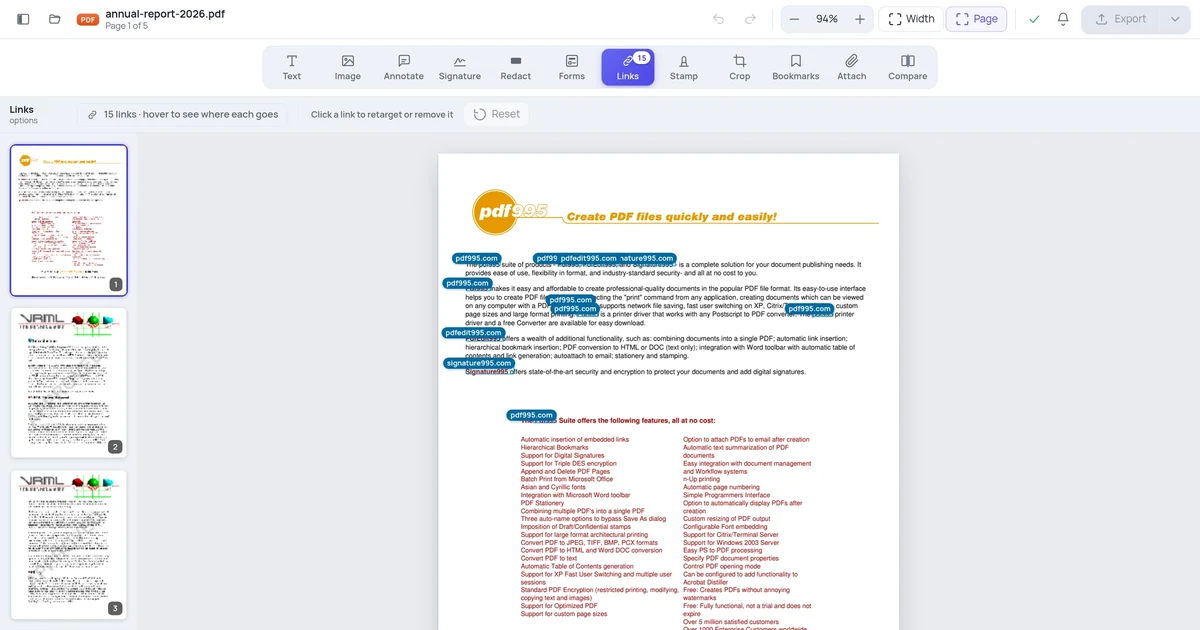
- Open your PDF in the editor. Go to the PDF editor and upload the file. It opens in your browser with every page ready to edit.
- Click the text you want to change. Click directly on the words. The editor selects that text block and shows its current formatting, including the active font.
- Highlight the exact text to restyle. Drag to select a word, a line, or the whole paragraph. The font change applies to whatever is selected, so select deliberately.
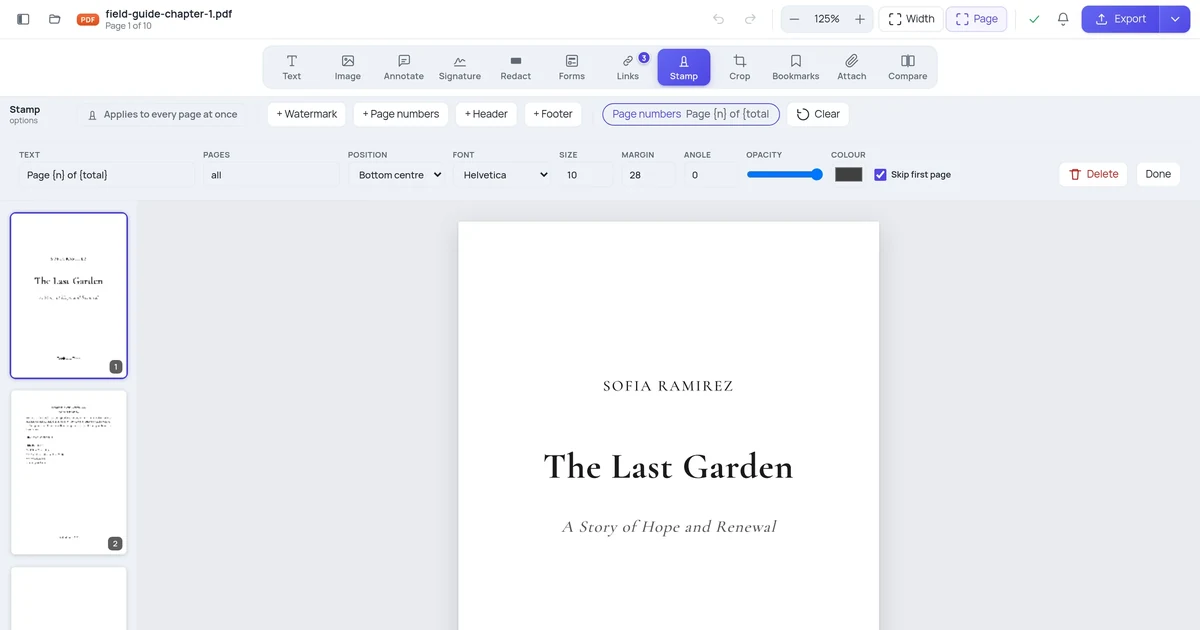
- Open the font dropdown. In the formatting toolbar, find the font selector. It lists the typefaces you can apply.
- Pick the new font. Choose your typeface from the list. The selected text re-renders in the new font immediately, so you can see the result.
- Check the spacing. Look at the line after the swap. A wider font can push text onto the next line or overlap a neighbor; a narrower one can leave a gap. Adjust if needed.
- Repeat for other blocks. If more text needs the same font, select each block and apply it. There is no global "change all" for arbitrary text in a fixed PDF.
- Save and download. Export the file. The new font is written into the document and travels with it.
That is the whole task for a heading or a paragraph. The part most guides skip is what happens to the width of your text and whether the font actually survives the trip to someone else's screen, which are the next two things worth understanding.
The catch: fonts change the width of your text
This is the surprise that catches people the first time. Two fonts at the same point size are almost never the same width. Swap a condensed font for a wide one, or a serif for a chunky sans-serif, and the same sentence now needs more horizontal room. In a word processor the paragraph would simply reflow. In a PDF, text sits in fixed positions, so a wider font can spill past the margin, collide with the text beside it, or get pushed to a new line that overlaps whatever was below.
The reverse happens too: a narrower font leaves an obvious gap where the line used to end, which looks unfinished, especially in justified paragraphs.
So treat the font swap and the cleanup as one job, not two. After you pick the new typeface:
- Reread the line ends for overlaps and overflow past the margin.
- Look at line spacing if the new font is taller; descenders and ascenders can touch the line above or below.
- Nudge the text block or adjust spacing so it sits cleanly again.
- If it still does not fit, drop the font size a point or two, which is a separate control covered in our guide on how to change font size in a PDF.
For a single heading this is trivial. For dense body text, the spacing cleanup is the real work, and it is the honest reason changing fonts across a long document is slow.
The bigger trap: missing or unembedded fonts
Here is the failure mode nobody warns you about, and it is the one that quietly ruins font changes. PDFs can embed fonts, meaning the actual typeface data is packed inside the file so it renders identically everywhere. But if you apply a font that is not embedded and the file relies on the reader's system having it installed, then a computer without that font will substitute a different one. Your elegant typeface becomes whatever the viewer guesses, and the layout you carefully cleaned up shifts all over again.
This is why a font change can look perfect on your screen and wrong on a colleague's. You have the font installed; they do not, and their reader swaps in a fallback.
| Situation | What the reader shows | Reliable? |
|---|---|---|
| New font is embedded in the PDF | Your exact typeface, everywhere | Yes |
| New font relies on the reader's system | Whatever font that system substitutes | No |
| Font on your machine but not the reader's | A fallback like a generic serif or sans | No |
The practical fix is to use fonts the editor can embed, or stick to common, widely available typefaces (the standard sans-serif and serif families) when you cannot guarantee embedding. A good online editor handles embedding for you on export, so the safest move is to apply a font the tool offers and let it write the font data into the file when you download. If you are sending the PDF to print or to many recipients, this is the difference between a change that holds and one that silently breaks.
When the text won't select: scanned PDFs
If you click your text and nothing selects, or you cannot find any text to restyle at all, your PDF is almost certainly a scan. A scanned document is a picture of a page. There are no fonts in it, only pixels arranged to look like letters, so there is nothing to change the typeface of.
You have two options:
- Run OCR first. Optical character recognition reads the image and produces real, selectable text. Once the page has actual text, you can change its font like any other PDF. Be aware the recognized text is a new layer; it may not perfectly match the scanned image's original look.
- Cover and retype. For a small fix, place a box over the old text and type fresh text in the font you want on top. This is quicker for a line or two but obviously will not restyle a whole scanned page.
Either way, the key realization is that you cannot change a font that does not exist as text. If selecting feels impossible, stop hunting for a font dropdown and deal with the scan first.
Font, size, and color are three separate jobs
People often say "change the font" when they mean one of three different edits. Keeping them distinct saves time, because each has its own control.
| You want to change | The control | Guide |
|---|---|---|
| The typeface (the actual font family) | Font dropdown | This article |
| How big the text is | Size field | Change font size in a PDF |
| The text color | Color picker | Change text color in a PDF |
Changing the font alone leaves the size and color exactly as they were. So if your heading is the right typeface but still too small, that is a size edit, not a font one. If it is the right font but the wrong color, reach for the color picker instead. You can of course do all three on the same selection; just know they are independent settings.
When changing the font is the wrong move
Restyling selected text is the right tool for a heading, a label, a caption, or a paragraph or two. It is not always the right tool for a whole document.
If you have the original source file, the Word document, the InDesign project, the Google Doc the PDF was exported from, change the font there and re-export. You will get proper styles, automatic reflow, and guaranteed embedding, with none of the line-by-line spacing cleanup that a fixed PDF forces on you. Editing the PDF is for when you do not have the source, or the change is small enough that opening the original is overkill.
There is also the opposite case, where you want to edit the words without touching the typeface at all, for example fixing a typo in a brochure and needing the corrected text to match its surroundings exactly. That is a different goal, and our guide on how to edit PDF text without changing fonts or layout covers keeping everything consistent while you change content.
A quick word on privacy, since you are uploading a document. An online editor processes your file on a server to make the change, and files are not kept long-term. That is normal for browser-based editing, but it is worth knowing before you upload anything sensitive.
A worked example
Say you have a one-page event flyer exported as a PDF, and the headline is in a font you have come to dislike. You open the file in the PDF editor, click the headline, and drag to select the whole line. You open the font dropdown and choose a cleaner sans-serif. The headline re-renders instantly, but because the new font is slightly wider, the last word now bumps past the right margin. You drop the size by one point and the line fits again, balanced and centered. The body text below is untouched because you never selected it. You download the file, open it on your phone to double-check, and the headline shows the new font correctly because the editor embedded it on export. One headline restyled, the rest of the flyer left exactly as it was.
FAQ
Can you change the font in a PDF?
Yes. Open the PDF in an online editor, click and select the text you want to restyle, then choose a new typeface from the font dropdown. The change applies to your selection, so you can restyle a heading or a whole paragraph. Save and download to lock it in. The one limit is scanned PDFs, which are images with no real text; those need OCR before any font can be changed.
Why does the layout shift after I change the font?
Because different fonts have different widths. The same sentence in a wider typeface needs more horizontal space, so it can overflow the margin, overlap nearby text, or wrap to a new line. PDF text sits in fixed positions and does not reflow automatically, so you fix it manually: nudge the block, adjust spacing, or drop the size a point. Treat the font swap and the spacing cleanup as one task.
Why does my new font look wrong on someone else's computer?
The font probably was not embedded in the file, so their reader substituted a different one. PDFs only guarantee a typeface displays everywhere if the font data is packed inside the file. If it relies on the viewer's system having the font installed, a computer without it shows a fallback. Use fonts your editor can embed, or stick to common families, and let the tool embed on export.
How do I change the font for the whole PDF at once?
There is no single switch for arbitrary text in a fixed PDF, because each text block holds its own formatting rather than referencing a global style. You restyle each block by selecting it and applying the font. For a whole document, that is real work, so if you have the original source file, change the font there and re-export instead, which gives proper styles and automatic reflow.
Can I change the font in a scanned PDF?
Not directly, because a scan is an image of a page with no actual text, only pixels. You first run OCR to recognize the text and turn it into a real, editable layer; then you can change its font like any other PDF. For a quick one-line fix you can instead cover the old text with a box and type new text in your chosen font on top, but that will not restyle an entire scanned page.