How to Copy Text From a PDF (Even Locked or Scanned Ones)
A practical guide to copying text from any PDF, including scanned images and password-protected files, with fixes for the common problems that trip people up.

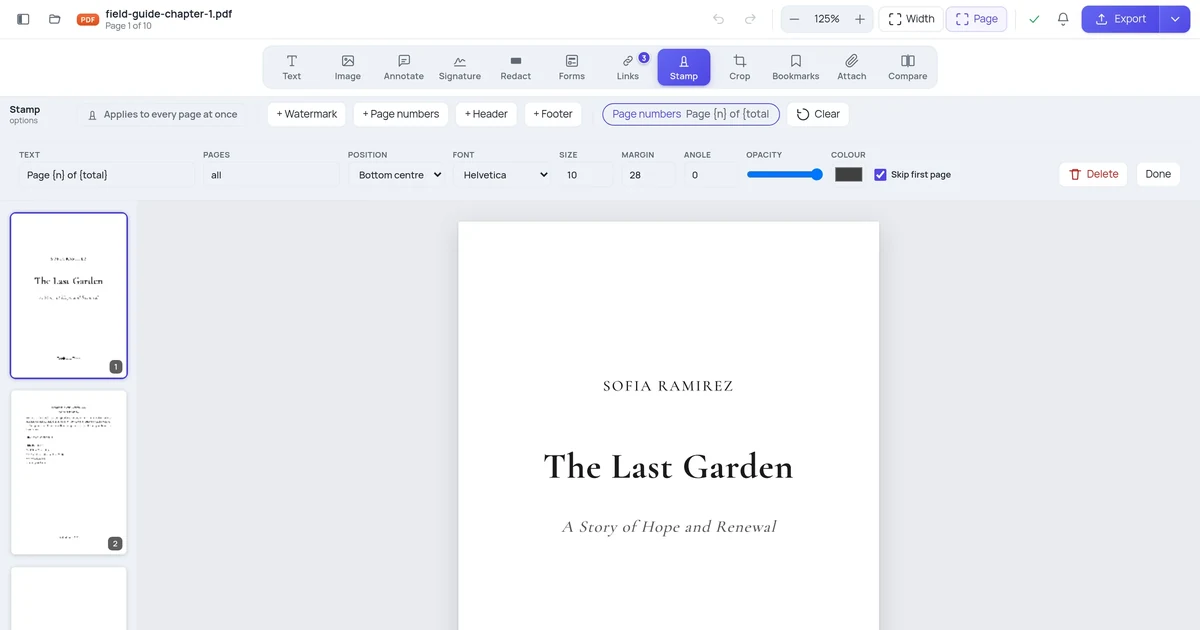
To copy text from a normal PDF, open it in any viewer, drag to highlight the words, then press Ctrl+C (Cmd+C on Mac) and paste where you need them. If highlighting doesn't work, the page is a scanned image and needs OCR to make it selectable. If copying is blocked, the file has a permissions password you'll need to clear first. Each case has a quick fix below.
Key takeaways
- Selectable text copies in seconds: highlight it, press Ctrl+C or Cmd+C, and paste. The trick is knowing whether your PDF actually contains real text.
- Scanned PDFs are pictures of text, so highlighting does nothing. You run OCR (optical character recognition) to turn the image into selectable, copyable words.
- A "locked" PDF usually means a permissions password that disables copying. Once you have the rights to the file, you can remove that restriction and copy normally.
- Pasted text often arrives scrambled with broken line breaks or missing spaces, because PDFs store letters by position, not as flowing sentences.
- Your phone can copy PDF text too, using the built-in long-press selection on iPhone and Android, with OCR available for scans.
- No single method fits every file, so the first job is always to identify which of the three types you're holding.
First, figure out which kind of PDF you have
Before you copy anything, spend ten seconds identifying your file, because all three problems look identical at first glance. Open the PDF and try to drag-select a sentence with your mouse.
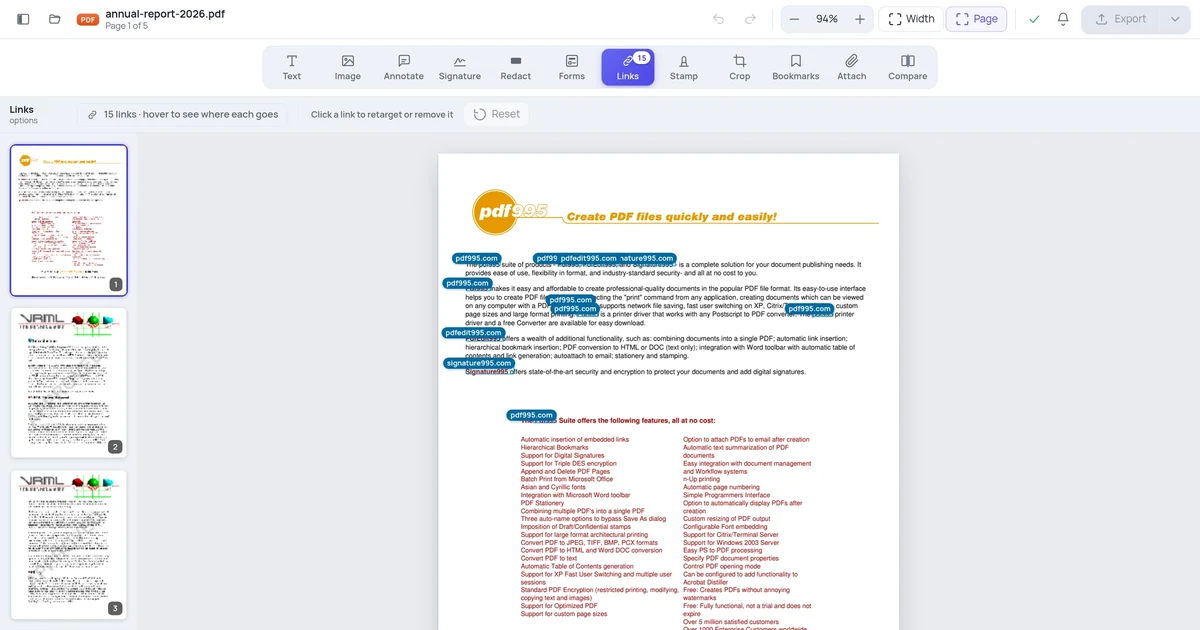
- If a blue highlight follows your cursor over the words, you have a text-based PDF. Copying is trivial.
- If your drag highlights nothing, or selects a big rectangular block instead of individual words, the page is an image (a scan or a photo). You'll need OCR.
- If the text highlights fine but Ctrl+C does nothing, or the editor refuses to let you select, the file is permission-locked.
This one test saves a lot of frustration. People often assume their copy keyboard shortcut is broken when the real issue is that there's no text to copy, only a picture of text. The fix for each type is completely different, so getting this right first is the whole game.
How to copy text from a normal (text-based) PDF
This is the easy case and the one most files fall into. A text-based PDF stores actual characters, so any viewer can select them.
- Open the PDF in your browser, Adobe Acrobat Reader, Preview on Mac, or any PDF app.
- Click and drag across the text you want, starting just before the first word and releasing after the last. The selection turns blue.
- Copy it. Press Ctrl+C on Windows, Cmd+C on Mac, or right-click the selection and choose "Copy."
- Paste into your document, email, or note with Ctrl+V or Cmd+V.
To grab everything on a page, click inside the text and press Ctrl+A (Cmd+A) to select all, then copy. To copy the whole document at once, an editor is faster than a plain viewer because it keeps the text in reading order.
The catch: pasted text comes out scrambled
Here is the thing nobody warns you about. You copy a clean paragraph, paste it, and it arrives with a line break after every line, random missing spaces, or hyphenated words split in two. That's not a bug in your software. PDFs don't store sentences; they store each glyph at an x,y coordinate on the page. When you copy, the viewer guesses how to stitch those positions back into words and lines, and it often guesses wrong, especially with columns, justified text, or fancy layouts.
If your paste looks garbled, you're not alone, and there are specific cleanup tricks. We wrote a full breakdown in why copy-pasting from a PDF scrambles the text, covering why it happens and how to get clean output. For one-off cleanup, paste into a plain-text editor first to strip formatting, then fix the line breaks before moving the text to its final home.
How to copy text from a scanned PDF
A scanned PDF is a photograph of a page wrapped in a PDF container. There's no text inside, only pixels, so highlighting grabs nothing. To copy from it, you first convert the image into text using OCR.
- Confirm it's a scan. Try to select a word. If you can't, or the whole page selects as one image, it's scanned.
- Run OCR on the file. Upload it to an OCR-capable tool, or use the "Recognize Text" feature in a desktop PDF app. OCR reads the shapes of the letters and reconstructs them as real, selectable characters.
- Wait for processing. A few pages take seconds; a long document takes longer. The tool lays an invisible text layer over the image.
- Now select and copy as you would with any text-based PDF. The words you couldn't touch before will highlight and copy.
If you only need a few sentences and don't want to OCR the whole file, a quick alternative is to take a screenshot of the passage and use a phone's built-in text grabber (covered below) or a desktop screenshot-to-text tool. For anything more than a paragraph, OCR the document properly.
The catch: OCR makes mistakes
OCR is good, not perfect. Expect errors, and know where they hide:
- Poor scans produce poor text. A crooked, faint, or low-resolution scan gives OCR less to work with, so you get more wrong letters.
- Lookalike characters get confused: the number 0 and letter O, 1 and l, rn read as m. Always proofread copied OCR text before you rely on it.
- Handwriting rarely works. Standard OCR is built for printed type. Cursive and messy handwriting often come out as nonsense.
- Tables and columns can jumble. OCR may read across a two-column page as one wide line, mixing the columns together.
The honest takeaway: OCR saves you from retyping, but it doesn't free you from reading what it produced. Treat the output as a strong first draft, not a final copy, particularly for names, numbers, and anything legal or financial.
How to copy text from a locked PDF
"Locked" can mean two different things, and only one of them stops you from copying.
- An open password (or "user password") means you can't even view the file without a password. If you have it, type it to open, then copy normally.
- A permissions password (or "owner password") lets anyone open the file but disables actions like printing, editing, or copying. This is the one that makes Ctrl+C do nothing even though the text highlights fine.
If copying is blocked by a permissions password and you have the right to use the file (it's yours, or you have authorization), you can remove that restriction:
- Open the PDF in an editor that can manage security settings.
- Locate the permissions or security settings for the document.
- Remove the copy/extraction restriction, entering the owner password if the tool asks for it.
- Save the file, then select and copy the text as usual.
A word of caution. Only do this with files you own or are authorized to handle. Removing protection from someone else's confidential or copyrighted document can break the terms you agreed to, and may be illegal depending on where you are. The technical step is easy; the responsibility is yours.
The three PDF types at a glance
| PDF type | What you see | Why copy fails | The fix |
|---|---|---|---|
| Text-based | Words highlight blue when dragged | Nothing fails; it just works | Highlight, Ctrl+C / Cmd+C, paste |
| Scanned image | Drag selects a box, not words | There's no text, only pixels | Run OCR, then copy |
| Permission-locked | Text highlights but won't copy | Owner password disables extraction | Remove the restriction (if authorized), then copy |
Most "I can't copy from this PDF" problems are one of these three. Match your file to a row and you'll know exactly which method you need.
Copying PDF text on your phone
You don't need a computer. Both major phone platforms handle PDF text well.
iPhone and iPad. Open the PDF in Files, Books, or any viewer. Long-press a word until it highlights, drag the grab handles to extend the selection, then tap "Copy." For scanned PDFs and photos, iOS Live Text can lift text straight off an image: open the picture, press and hold on the text, and the system makes it selectable, no OCR app required.
Android. Open the PDF in Google Drive, the Files app, or a reader. Long-press to start a selection, drag to expand it, and tap "Copy." For scans or photos, Google Lens (built into the camera and Photos) recognizes text in an image and lets you copy it to your clipboard or send it to your computer.
On both platforms the same caveats apply: real text copies cleanly, scans need recognition first, and the output can still arrive with odd line breaks worth tidying.
When copying text isn't really what you need
Sometimes "copy the text" is a workaround for a different goal, and there's a more direct route.
If you want to change words inside the PDF rather than pull them out, copying isn't the move. Open the file in the PDF editor and edit the text in place. The same applies when you need to take something out: our guide on how to delete a word or line of text in a PDF walks through removing text cleanly instead of copying it elsewhere to retype.
If you need the entire document as an editable file, exporting the PDF to Word or a text document is cleaner than copying page by page, because it preserves more structure and saves you the line-break cleanup. And if you only need a single figure or a quote for reference, a screenshot is often quicker than fighting with text selection at all. Pick the tool that matches the actual outcome you want, not just the first one that comes to mind.
A quick, honest note on privacy: online editors and OCR tools process your file on a server to do the work, and files aren't kept long-term. That's normal for browser-based tools, but it's worth knowing before you upload anything sensitive.
FAQ
Why can't I copy text from a PDF?
Usually one of three reasons. The PDF is a scanned image, so there's no real text to select, only a picture, and you need OCR first. Or it has a permissions password that disables copying even though the text highlights. Or the document genuinely has selectable text and your selection slipped. Try dragging to highlight a sentence: if nothing highlights, it's a scan; if it highlights but won't copy, it's locked.
How do I copy text from a scanned PDF?
Run OCR on it. OCR (optical character recognition) reads the shapes of the printed letters and rebuilds them as a hidden, selectable text layer over the image. Upload the file to an OCR tool or use the "Recognize Text" feature in a desktop PDF app, wait for it to process, then highlight and copy as normal. Always proofread the result, since OCR mixes up lookalike characters like 0 and O.
How do I copy text from a password-protected PDF?
If it asks for a password just to open, type it and then copy normally. If it opens fine but copying is blocked, that's a permissions (owner) password disabling extraction. Open the file in an editor that manages security settings, remove the copy restriction, save, and then copy. Only do this with files you own or are authorized to use; bypassing protection on others' documents can be illegal.
Why does text come out scrambled when I paste from a PDF?
Because PDFs store each letter at a fixed position on the page rather than as flowing sentences. When you copy, the viewer reconstructs lines and spaces from those coordinates and frequently gets it wrong, adding stray line breaks or dropping spaces, especially with columns or justified text. Paste into a plain-text editor first to strip formatting, then fix the breaks. Our guide on scrambled PDF copying covers the deeper fixes.
Can I copy text from a PDF on my phone?
Yes. On iPhone or iPad, open the PDF, long-press a word, drag the handles to select, and tap Copy; iOS Live Text can also lift text from scanned pages and images. On Android, long-press to select in any reader, or use Google Lens to recognize text in a scan or photo and copy it. Real text copies cleanly; scanned pages need recognition first.